Friday, February 19, 2010
level playing fields
Another group of us is made newly-liminal, and another opportunity to observe boundary behaviors arises. I had the opportunity to portray interim shelter designs and configurations for displaced Haitians. The drawings had to put the product in context, which meant looking at photos of Port-au-Prince with curiosity instead of shock and sadness. Although most everything to be delivered is modular and already expressed in 3D model format, the software-composed configurations were so -- out of left field: brutal, machined, inappropriate. I wondered how things were playing out with "the competition", how living space among our displaced brothers and sisters in Haiti is being defined now: chalk lines on a soccer field, tarp-defined boundaries, rubble repurposed as property lines. Click the photo to get closer. Google Earth assists.
Saturday, February 6, 2010
can't get started (without you)
Click on the kitchen and you can rotate and zoom in on it. Sketchfab is like Pinterest for 3D modelers to share manipulable, virtual objects with anyone who has a browser. But the object still has to be modeled! How to get started? Temple Grandin makes a case for tactile involvement in design:
"One of the things I’ve noticed, been involved in my industry designing things for over 25 years. The people who are really good at drafting on the computer are the people who were good at drafting by hand. People coming in now doing computer-aided drawing are doing terrible drawings, they make lots of errors, they leave out perceptual detail, they don’t see it. The errors made in their drawings are the errors that the very worst students in my design class make; these are the students that have no visualization capability. I don’t think the mouse is hooked up to the brain like the hand is. You don’t make some of these mistakes if you actually draw the thing by hand. Let’s say for example, you’re drawing a cattle stockyard, you’ve got a whole lot of gates in it; one draftsman I saw, using computer-aided drawing, had 25-foot gates built in it. You can’t have a 25-ft. long gate; the leverage will make it come off the hinges. Now if you take a compass, you’ll see that you can’t do it. I’m seeing more and more mistakes being made in construction because it’s getting too abstract.
I visited with Irene Pepperberg, whose parrot can learn categories. To learn them, he had to manipulate the objects; looking wasn’t enough for him to understand. I can really relate to that. Touching gives an understanding you don’t get just by looking." 2000 interview with Temple Grandin in the Harvard BRAIN, bold emphasis mine.
Drawing by hand and rough modeling with cardboard and clay are excellent ways to strengthen one's visualization capacity.
Friday, February 5, 2010
promise her anything
Renaissance linear perspective was not the first in "you-are-there" viewer manipulation! Some excavated Egyptian tombs contain a passage with a series of deep niches, in some of which sculpture or an image has been found. If one were to travel the passage, each image or sculpture would be visible only as one stood and gazed directly into the niche. Because of the depth of the niches, what was in store at the next niche could not be determined until one advanced further. Whatever the price of admission was to the chamber, the image-viewing experience was linear and predetermined.
Yesterday I bought a ticket to watch A Single Man, visually choreographed by Tom Ford. 99 minutes of paging through Vogue ads, perusing distinct compositions, while Ford channeled Isherwood. It was not a 3D movie, but it elicited a similar jolt when Ford snatched at my emotional netherbrain --where olfactory memories reside. A couple times in the film, our hero takes a slow-mo trip, a nose-dive into a dog's coat ("buttered toast") or a visual expedition up his department secretary's neck ("Arpège"). I wonder if those 5000 year-old niches once had their own scent-tracks: bunches of lavender, anise or myrrh?
Monday, February 1, 2010
you ain't seen nothin' yet
Systems theorist Fritjof Capra, in his book on the science of Leonardo da Vinci, argues that our most creative insights emerge from states of uncertainty and confusion according to a process of "emergence", the creation of new forms of order out of chaos and confusion. So our pals at the Albany Bulb may be at the cusp of a life-changing insight, about to radically alter their beings. Or not.
Earthquakes changing landforms changing waterways finds a parallel to hair growth patterns where the skin has scarred, or the way a form is perceived in a drawing after a lost period of erasures and scribbling. Leonardo had an ear for the harmony of these orders; he documented and compared phenomena throughout his life. Conceding our wisp of consequence on the celestial time line, he wrote "nature is full of infinite causes that have never occurred in experience."
Sunday, January 31, 2010
more than camping
Some of us in liminal states, self-imposed, genetically predisposed (!), or socially imposed, have found space to contemplate our integration/isolation, rent-free, at the Albany bulb. A variety of ad hoc pods, encampments and fortresses provide rich data to observe spatial relations and boundary setting behavior among liminal beings. I'm not talking about the sculpture or painting there; I'm curious about the red rags and rearranged foam blocks -- the creation of physical limits when social, psychological and spiritual boundaries are in flux.
Saturday, January 16, 2010
point and shoot
More specifically, we have noted a remarkable relationship between left temporal and parietal activity during the aiming period such that quiescence or “relaxation” in this region is related to higher-quality performance.
Another place to go besides the left brain is the limbic brain. I may not be able to will myself to go there, but there are activities that engage the limbic brain. Swinging, chanting, circle dancing and aiming. Limbic brain engagement supposedly has that "in the zone" feeling that sometimes comes from drawing, too. I wonder if it is simply left-brain disengagement.Thursday, January 14, 2010
struck
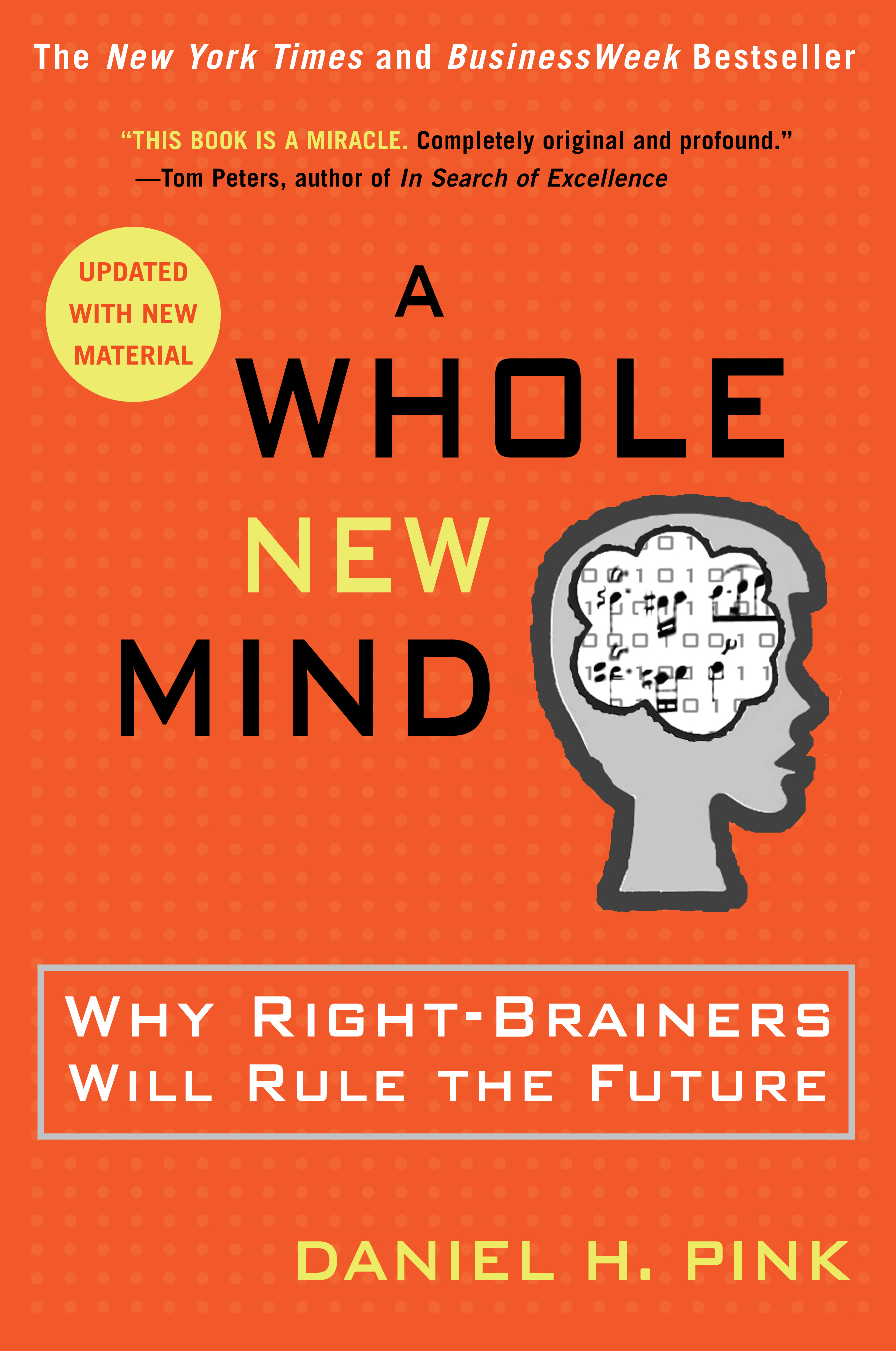
I like the way it feels while switching from plan to elevation to perspective to photograph; measuring units, rotating models, erasing chalk and applying color. A most serene state arrives via drawing. My brother had a stroke about a month ago. As in many stroke victims, the left carotid artery was compromised, and he lost some ability to find and pronounce words, along with other functions normally governed by the left brain. Many art students are aware of Betty Edwards' exercises. Temple Grandin and Jill Bolte Taylor also have stories to make us aware of the gifts of those whose brains use a different hierarchy. My brother has been ambidextrous since childhood, a hands-on problem solver, a crazy talker, god-respecting and a musician to boot. He's infamous for making folks guess what tune he's tapping out on the table. It's a comfort to think there are many unusual paths trod thru the grass of his brain that will come in handy during recovery. He and his ilk may yet rule the planet.
Subscribe to:
Posts (Atom)